ENVIRONMENTAL
Providing first class water and occupational hygiene services to our clients across numerous sectors throughout the UK.
Environmental Solutions
Novelus are delighted to partner with Synergy Environmental Solutions to develop and deliver water and air treatment services to organisations of of all sizes throughout the UK.
We provide services to clients in sectors such as Building Services, Facilities Management, Engineering & Manufacturing, Health & Social Care and Education plus many more.
OCCUPATIONAL HYGIENE SERVICES
Work Air Monitoring
All workplace areas must be safe from airborne substances which could affect your employees and visitors health.
COSHH Regulations place a duty of care on employers to undertake regular assessments to evaluate the risks when using hazardous substances in the workplace.
If any of these regulations are broken and a person is exposed to any hazardous substances, it could cause ill health.
In industrial and manufacturing environments there are hazardous elements including:
- Volatile Organic Compounds
- Total Inhalable Dusts
- Respirable Dusts
We can offer expertise in undertaking assessments in dust, fume, and vapour monitoring in a range of industrial sectors and manufacturing environments.
COSHH Risk Assessment
A COSHH risk assessment will concentrate on reviewing the risks from hazardous substances in all workplace areas. These may include:
- Inhalation
- Ingestion
- Absorption
- Injection
Employers must make sure that the exposure of any of their employees to any hazardous substances is prevented or adequately controlled.
LEV Testing and Servicing
By installing a Local Exhaust Ventilation system your business can remove hazardous substances from the workplace air. To provide the full necessary protection, LEV testing is required regularly.
A regular service and inspection of your Local Exhaust Ventilation systems will ensure they are in good working order and provide protection for your employees.
Employers’ have a responsibility to ensure the thorough testing and examination of LEV systems according to Regulation 9 of the COSHH Regulations and there is a legal requirement that testing and servicing is to be undertaken every 14 months.
Workplace Noise Monitoring
Employees subjected to loud noise from machinery in the workplace on a regular basis could be at risk of losing their hearing. Noise-induced hearing loss is one of the most reported occupational risks in the workplace.
It is the employer’s responsibility to make sure the risk from exposure to noise is eliminated or reduced to its lowest level, or to make personal hearing protection available.
As an employer, you should also place employees who are at risk under suitable health surveillance and provide regular hearing tests.
Hand Arm Vibration Testing (HAVs)
Vibration induced medical conditions can occur by working with vibrating tools such as grinders and drills, which cause damage to nerves, blood vessels and joints of the hand, wrist and arm.
Workers who use hand-held power tools for prolonged periods are at risk of developing a health condition, particularly Hand-arm Vibration Syndrome.
It is the employer’s responsibility to make sure the risk from exposure to hand-arm vibration is eliminated or reduced and employees at risk are placed under health surveillance.
Whole Body Vibration (WBV)
Employees who drive an onsite vehicle, such as a forklift truck, may be exposed to excess levels of whole-body vibration which could cause medical conditions such as vascular disorders, neurological and muscular damage. It is up to the employer to prevent damage caused by vibration at work.
Safety regulations state that employers should make sure risk from exposure to whole body vibration is either eliminated at source or reduced to as low a level as possible.
Breathing Airline Tests
Monitoring and retaining a high quality of air is vital in enclosed environments, such as a spray booth, where air is provided through a compressor.
Legislation states that equipment should be tested at least every three months to make sure air quality levels are sufficient.
It is up to employers to make sure breathing airline tests are carried out and they comply with the relevant safety regulations.
Lighting Assessments
Every workplace needs to have suitable and sufficient lighting so that employees can do their jobs effectively.
Natural lighting should be provided where possible and windows should be designed so that they can be cleaned safely.
Lighting regulations require the following:
- Local lighting provided at individual workstations
- Stairways should be well lit and outdoor traffic routes used by pedestrians should be adequately lit after dark
- Lights should not be obscured
- Lights should be replaced, repaired, or cleaned to ensure an adequate level of lighting
- Windows and skylights should be cleaned regularly
- Emergency lighting should be powered by a source independent of that used for normal lighting
It is vital your workplace follows the guidelines on lighting – it has been proven that lighting effects a worker’s efficiency and productivity and dim lighting can cause detrimental eye complications, headaches and drowsiness.
Similarly, highly intense artificial lights can cause migraines and eye injuries.
Heat Stress Study
Humans maintain a core temperature of around 37oC. If someone works in a particularly hot environment, stress can occur which leads to injury.
Heat stress occurs when the body’s means of controlling its internal temperature starts to fail. As well as air temperature, factors such as work rate, humidity and clothing worn while working may lead to heat stress.
Regulations require employers to monitor the warmth in their workplace to make sure it is at a reasonable temperature.
The Approved Code of Practice recommends reasonable temperatures in workrooms to be at least 16°C unless much of the work involves severe physical effort, in which case the temperature should be at least 13°C.
Electromagnetic Field Assessment (EMF)
Invisible electromagnetic fields are emitted by all electronic and electrical equipment when in use.
Investigations have indicated that if EMFs reach certain levels, they have an adverse effect on the health of those exposed in two ways:
- Direct effects such as nausea, headaches, vertigo and heating of body tissue, nerves or internal organs
- Indirect effects including interfering with pacemakers, body implants and piercings.
The type and extent of the effects depends on the type of electronic equipment used and the frequency bands the EMF emits.
Due to the potential health effects, all companies must undertake a risk assessment of EMF exposure in their workplace.
D Sear
DSEAR is an acronym for the Dangerous Substances and Explosive Atmospheres Regulations, which require employers to control the risks to safety from fire, explosions, and substances corrosive to metals.
Dangerous substances can put peoples’ safety at risk from fire, explosion, and corrosion of metal. DSEAR puts duties on employers and the self-employed to protect people from these risks in the workplace, and to members of the public who may be put at risk by work activity.
WATER HYGIENE
Legionella Risk Assessment
To identify the risks from Legionella, an assessment should be conducted, which can be taken out by an experienced consultant.
A competent person onsite is responsible for making sure the Legionella risk assessment is carried out.
The most common places people will catch the Legionella from include hotels, hospitals or offices where the bacteria have got into the water supply.
It is vital you make sure a Legionella risk assessment is carried out to prevent your employees or other people from contracting illnesses, such as Legionnaires’ disease.
Every company in the UK legally requires a Legionella Risk Assessment.
Legionella Monitoring
If a company has five or more employees, it needs to record findings from Legionella risk assessments as well as the steps to prevent exposure to hazardous substances.
Employers also need to keep records of examinations, tests and repairs of control measures.
Legionella monitoring records should include details of the people responsible for the water system(s), the nature of the system operation, notable findings from the risk assessments and details regarding the written scheme of control.
Water Sampling
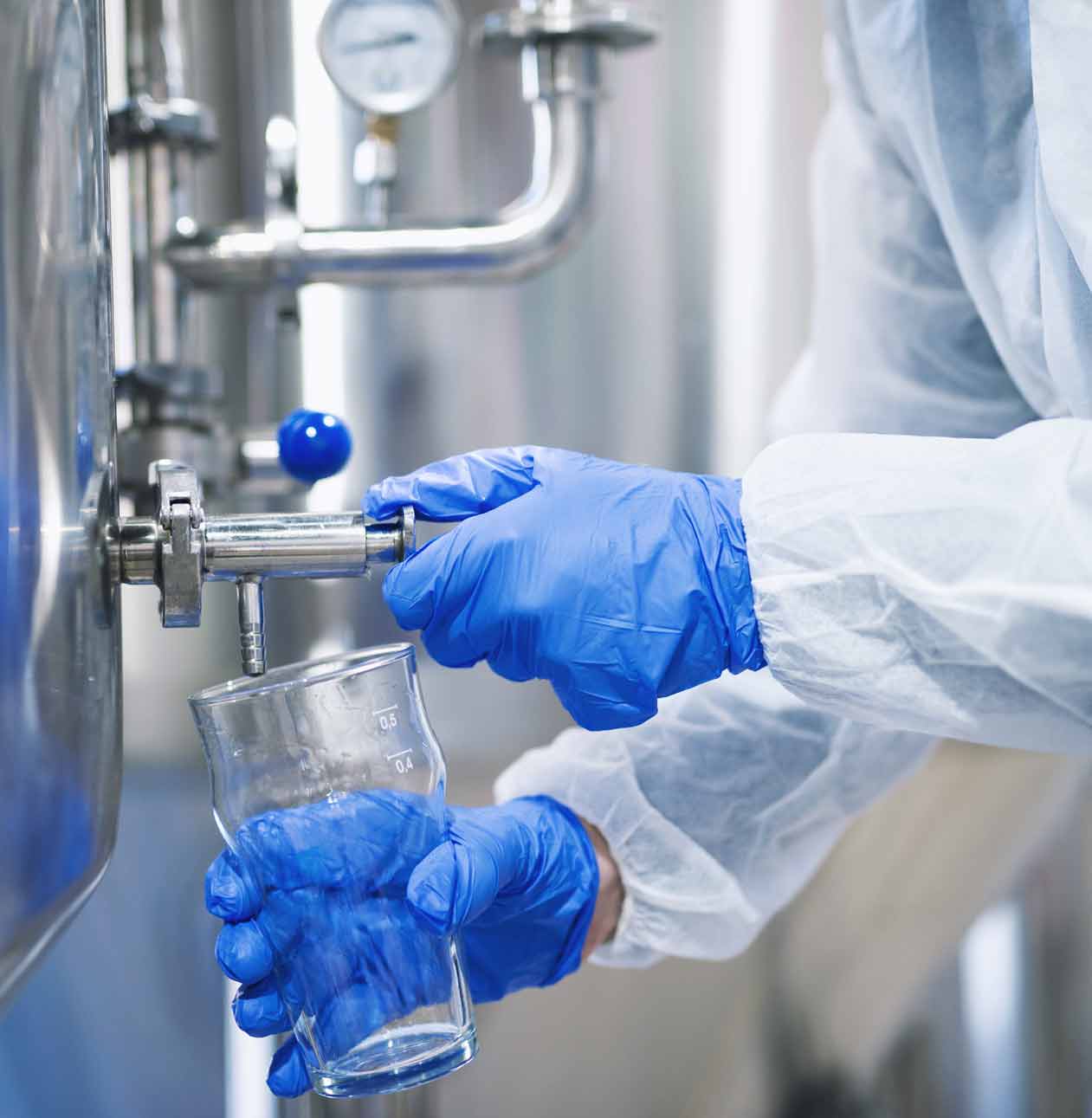
Determine the quality of your water supply with our water sampling service. Whether you need us to sample water from storage tanks, humidifiers, spa baths, cooling towers or much more, we can help.
The need for water sampling depends on the water system and its risks. For instance, domestic hot and cold-water supplies do not usually require water sampling (unless a risk assessment indicates there is a problem).
However, cooling towers need to be sampled on a regular basis – systems such as tunnel washers and horticultural systems require bespoke water sampling to make sure they are maintained properly.